
Radiant at 5,280 Feet: The Ultimate Guide to Sun Protection and Premature Aging Prevention
Here in Colorado, we love our outdoor lifestyle. Whether you are patio dining in Denver, hiking a favorite trail, or hitting the slopes, spending time outside is part of our DNA. But while our beautiful mountain landscape feeds the soul, it presents a unique set of challenges for our skin.
At b Theory Aesthetics, we talk constantly about skin health, barrier repair, and premature aging prevention. If there is one non-negotiable tool in your desire to achieve all three, it is daily sun protection. Proper sun protection does so much more than prevent a temporary burn. It actively helps reduce the sun-related signs of aging like fine lines, wrinkles, and deep pigmentation, it protects the skin’s healthy barrier function, and it significantly lowers your risk of getting certain types of skin cancer.
The Mile-High Difference: Why Altitude Changes Everything
Altitude makes a massive difference in the intensity of the sun that our skin experiences in Colorado. Denver proudly sits at 5,280 feet, and our surrounding mountains are even higher.
As you climb, the air becomes thinner and less capable of filtering out solar radiation. This is known as the UV Intensity Multiplier. UV radiation increases by approximately 10% to 12% for every 1,000 meters (about 3,300 feet) of elevation. This means right here in Denver, we experience roughly 15% to 20% more intense UV radiation than sea-level cities. If you head up into the mountains for a hike, that intensity can spike to as much as 35% more than sea-level.
The Cloud and Temperature Fallacy
Colorado famously boasts around 300 sunny days a year, but it is a common misconception that we only need protection when the sun is blazing. Even on cloudy, overcast, or cooler days, that thin mountain air fails to filter out UV rays effectively. Sun damage happens just as quickly in 60°F weather as it does in 90°F weather.
Furthermore, we have to consider reflection. Snow and water can reflect up to 80% of the UV rays back at you, nearly doubling your overall exposure.
The Dryness Factor
Colorado’s arid climate constantly compromises the skin’s transepidermal water loss (TEWL). When you introduce a sunburn into an already dry climate, it further destroys the fragile skin barrier. This leads to a vicious cycle of severe dehydration, premature aging, and heightened rosacea or sensitivity.
The True Cost of Exposure: Aging and Skin Cancer
When UV radiation penetrates the skin, it alters cellular DNA and degrades collagen. The visible result? Passive sun damage that shows up over time as sagging, premature wrinkles, sun spots, and potentially stubborn melasma.
Even more importantly, it impacts our health. According to the Skin Cancer Foundation, skin cancer is the most common cancer in the United States, with one-in-five Americans developing the disease by the age of 70. The organization also states that about 90% of non-melanoma skin cancers and about 86% of melanomas are associated with exposure to UV radiation from the sun.
It is vital to remember that there is no such thing as a safe tan. Tanning is simply the skin's defense mechanism crying out because it has experienced sun damage.
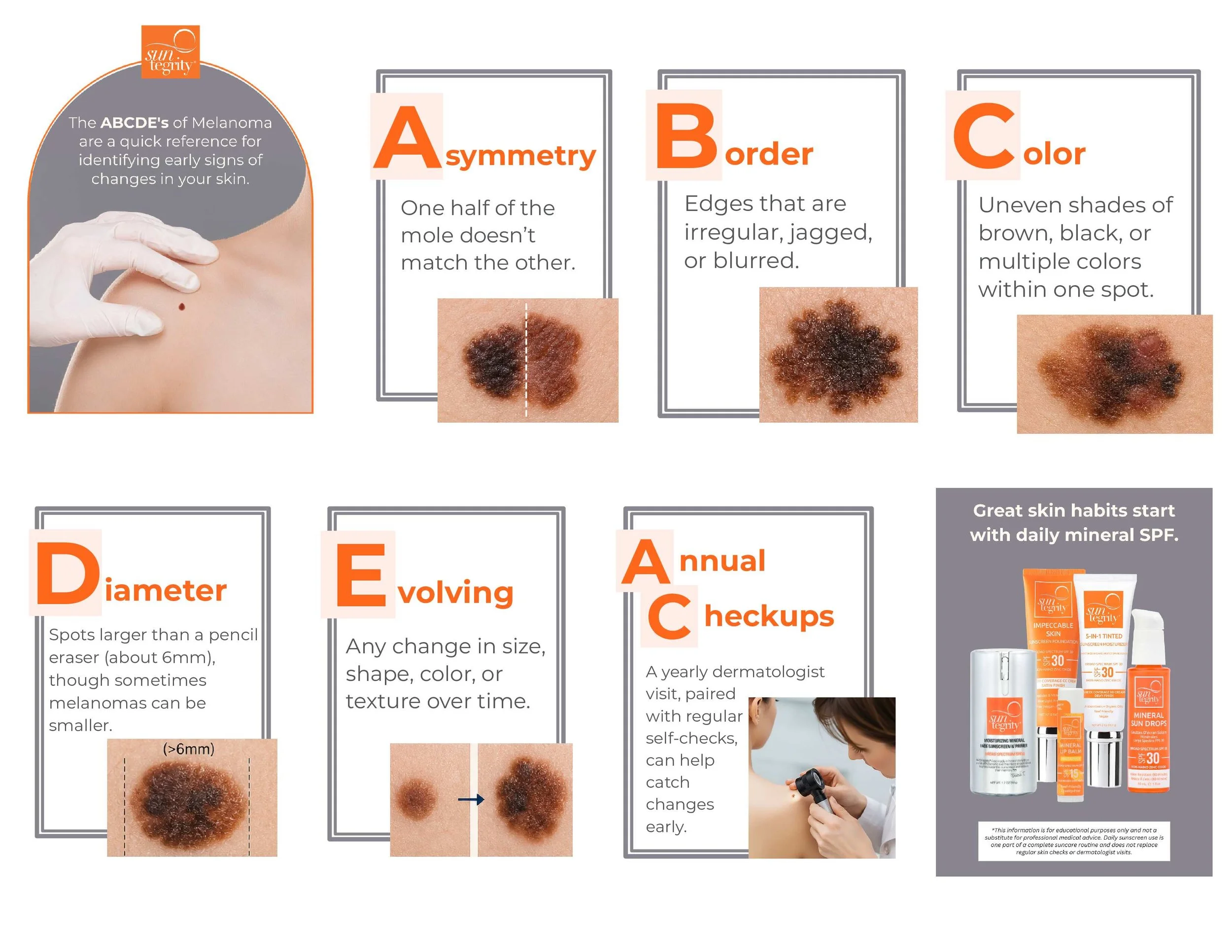
Use this guide as a quick reference for identifying early signs of skin cancer. See your dermatologist yearly to catch skin changes early.
What to Look For: The ABCDEs of Skin Cancer
Because we spend so much time under our intense Colorado sun, keeping an eye on your skin is just as important as protecting it. When checking your skin, a helpful rule of thumb to remember is the ABCDE guide for identifying potential signs of skin cancer, particularly melanoma:
A is for Asymmetry: One half of a mole or birthmark does not match the other half.
B is for Border: The edges are irregular, ragged, notched, or blurred.
C is for Color: The color is not uniform across the mole and may include varying shades of brown, black, pink, red, white, or blue.
D is for Diameter: The spot is larger than 6 millimeters across (about the size of a pencil eraser), although melanomas can sometimes be smaller.
E is for Evolving: The mole is actively changing in size, shape, color, or is causing new symptoms like itching, crusting, or bleeding.
Beyond moles, keep an eye out for any new sores that refuse to heal, or unusual, rough scaly patches that pop up on frequently exposed areas like the ears, face, and back of the hands.
An annual/bi-annual full body skin check with a dermatologist is a non-negotiable part of a healthy skincare routine! If you ever notice a spot that looks suspicious or is changing, please schedule an appointment with a medical professional right away.
Pro-Tips for Daily Sun Safety
To keep your skin healthy and gorgeous for years to come, protection needs to be a daily, year-round practice. You are exposed to UV rays on cloudy days, cold days, hot days, and sunny days alike. Daily application protects you from the passive sun damage you accumulate while driving in the car or sitting inside rooms with windows.
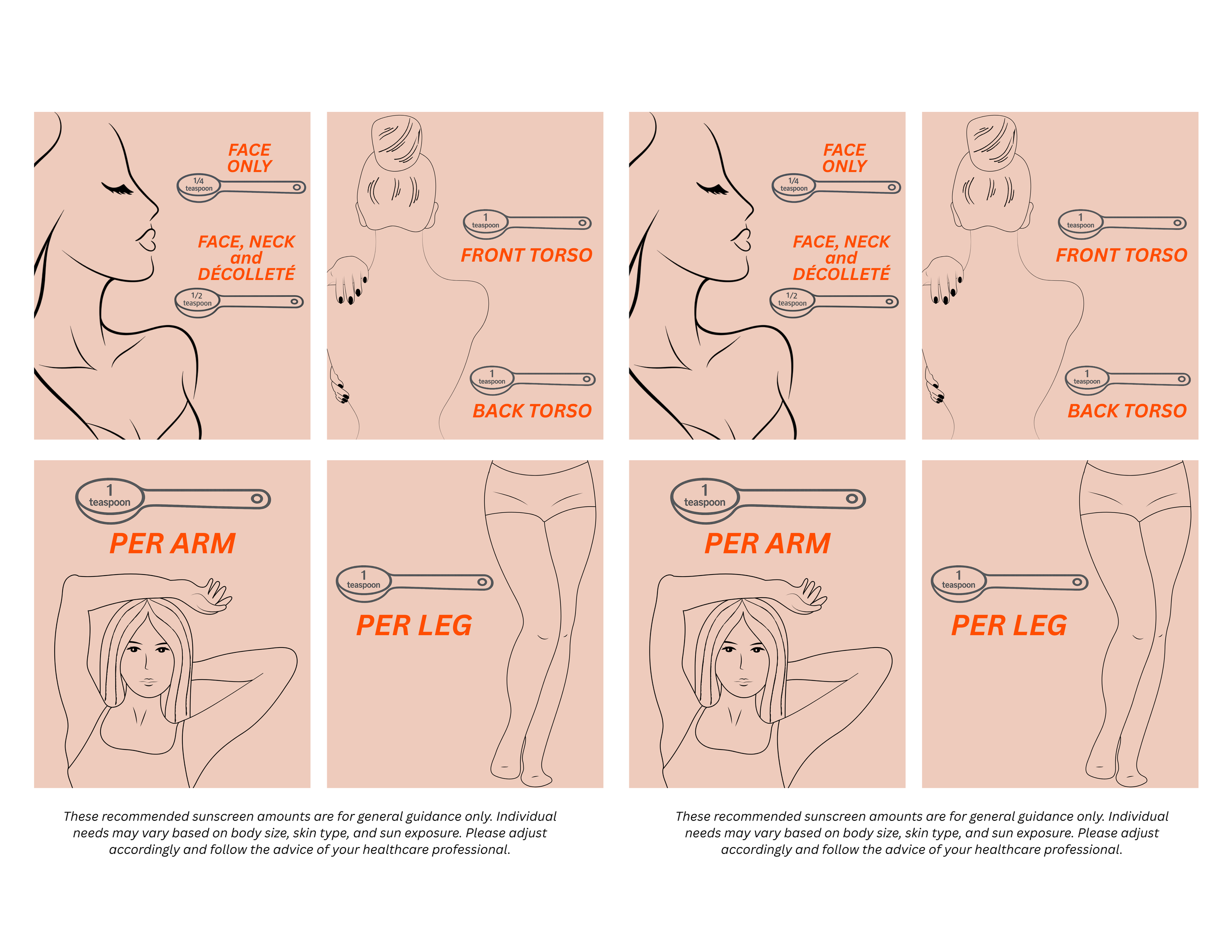
Follow this guide to ensure that you are applying enough sunscreen to all areas of the body for the best possible protection from sun damage.
Essential Application Rules:
Start Young and Cover Everyone: Everyone needs sun protection. Little ones as young as 6 months old can safely use sunscreen.
The Two-Finger Rule: For the face and neck, apply two full strips of sunscreen squeezed onto your index and middle fingers. Most people apply only 25% to 50% of the recommended amount, so this ensures proper coverage.
Don't Skip the Spots: Apply sunscreen to all exposed skin. Be sure to target the tops of the ears, the back of the hands, the neck, under the jawline, and the tops of your feet.
The Full Body Amount: Use a full ounce of sunscreen (about the size of a shot glass) to cover an adult body. Apply it 15 to 30 minutes before going outside.
The 2-Hour Strictness: Sunscreen wears off with sweat, wind, and water exposure. In our high altitude, reapplying every 2 hours when active outside is non-negotiable. Reapply immediately after getting out of the water.
The Reapplication Secret Weapon: For clients who wear makeup, keep a mineral SPF powder or a lightweight SPF mist on hand for effortless touch-ups throughout the day.
Embrace Physical Barriers: Sunscreen is only step one. For long outdoor activities like hiking or patio dining, pair your SPF with UV-blocking sunglasses, wide-brimmed hats, scarves, gloves, UPF clothing, and an SPF-rated lip balm.
Why Non-Nano Zinc Oxide is Our Gold Standard
While the sunscreen you will actually wear is always the best one for you, we highly recommend a non-nano zinc oxide formula with an SPF of 30 or higher.
Zinc oxide is a mineral that sits on top of the skin to reflect and scatter UV rays like a mirror, unlike chemical sunscreens, which absorb into the skin and turn UV rays into heat. The term "Non-Nano" means the particles of zinc oxide are larger than 100 nanometers. They are too large to penetrate the outer layer of human skin or enter the bloodstream, and they are too large to be ingested by marine life.
Benefits for Your Skin:
Ultimate Barrier Protection: Zinc oxide is naturally anti-inflammatory and soothing (it is the main ingredient in diaper rash cream!). It calms irritated skin, rosacea, and active acne while protecting it from the sun.
True Broad-Spectrum Coverage: It is the only single sunscreen ingredient that offers extensive protection against both UVA rays (aging and melasma) and UVB rays (burning).
Ideal for Arid Weather: It acts as a physical shield that helps lock in moisture, defending a dry Colorado skin barrier against harsh, drying winds.
Zero Thermal Heat: Chemical sunscreens convert UV rays into heat within live tissue, which can trigger heat-sensitive conditions like melasma and rosacea. Non-nano zinc bounces the light away, keeping the skin cool and preventing hyperpigmentation flares.
No Eye-Sting: Because it does not absorb into live tissue, it won't cause that dreaded burning eye-sting when you sweat during outdoor workouts.
Benefits for Our Planet:
Traditional chemical sunscreens contain ingredients like oxybenzone and octinoxate, which cause coral bleaching, disrupt marine reproduction, and harm aquatic life. Even though we live in Colorado, what we wash down our shower drains ultimately impacts the global water system and local freshwater ecosystems.
Furthermore, if a mineral sunscreen uses nano-sized particles, those tiny minerals can be consumed by coral and fish, causing ecological toxicity. Non-nano zinc particles are too large to be absorbed by marine organisms, settling safely into the environment without disrupting the food chain.